Marianne Gillespie
Hold TightMarianne Gillespie’s story emerges through the evidence left by her final days: a stay at the Travelodge in Livingston, a recording made as part of a revenge scheme, and the accounts of people who understood her actions differently. After her body is identified, investigators and her family piece together a sequence in which threats were real but the threatened release did not come from her. Her absence turns those distinctions into the central facts of her character and her effect on others.
Identity and Final Days
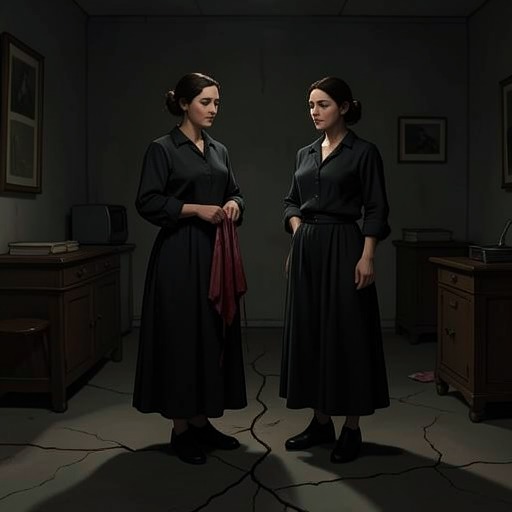
Marianne was Guy Novak’s ex-wife. When Loren Muse asked Guy when he had last seen her, he initially questioned why the investigation was turning to her when he thought it concerned the Lewistons. Muse then told him that investigators believed his former wife had been murdered. The news took time to register; Guy struggled to comprehend what he had been told. Later, he called Tia Baye after identifying Marianne’s body. He told Tia that the girls were safe and being watched by his friend Beth, even as he disclosed the death. His first concern in that call was to reassure her about the children, while the fact of Marianne’s murder made the family’s loss unmistakable.
Investigators also learned that Marianne had been staying at the Travelodge in Livingston and was expected to check out on the morning the information reached them. A hotel staff member remembered seeing her take a man to her room, though the witness could place the visit only approximately, four or five days earlier, around the time she checked in. This clue situates Marianne in a hotel during the period relevant to the investigation, but the staff member could not provide a precise date. The uncertainty matters: the account supplies a location and an approximate window, not a complete reconstruction of her movements.
The Recording and the Revenge Plan
The later account of Joe Lewiston’s predicament recasts what had first appeared to be a straightforward blackmail threat. Marianne had planned a revenge-driven seduction from the beginning. She concealed a camera in the hotel room, and within hours of leaving, she began calling Joe to tell him that she had recorded their encounter. She threatened to send the tape to Dolly Lewiston, then to the school board, and then to people whose email addresses she could find in the school directory. For three days, Joe lived under the threat. He could not sleep or eat, lost weight, and pleaded with Marianne not to release the recording.
Her purpose did not remain fixed. At some point, Marianne seemed to lose the energy behind the campaign. She told Joe that she was unsure whether she would send the tape at all. That hesitation complicates the image of her as a relentless blackmailer: the threats had consequences, but her resolve weakened, and the promised act remained undecided. The distinction between possessing a recording, threatening to distribute it, and actually sending it becomes crucial to what happens after her death.
What Was Sent—and by Whom
The investigation eventually established that Marianne never sent the tape. Guy told investigators that Marianne had told him about it and had wanted to let the matter go, believing the threat itself had punished Joe enough. Guy did not accept that restraint. He sent the tape to Joe’s wife, Dolly. The disclosure shifts responsibility for the recording’s eventual circulation: Marianne created it and used it to threaten Joe, but Guy made the choice to send it to Dolly.
A separate account from Jill Baye adds Yasmin Novak’s role in the later release of a video. Jill explained that she and Yasmin had spied on the adults and had seen a video on Marianne’s camera phone. Yasmin asked Marianne about it; Marianne said the matter was over and that Joe was suffering too. Jill and Yasmin nevertheless acted on their own. Jill sent an email about a party to prompt an adult response, while Yasmin sent out the video to make Joe pay for what he had done to Yasmin. Their account does not erase Marianne’s earlier scheme, but it distinguishes her decision to stop from the teenagers’ decision to intervene. The recording’s circulation therefore involved more than one person and more than one choice.
Family, Investigation, and Legacy
Marianne’s murder becomes a family crisis as well as a criminal investigation. Guy’s conversation with Tia shows him trying to separate the news of his ex-wife’s death from immediate concern for the girls. Yasmin’s actions, meanwhile, reveal that she had been watching the adults and had direct knowledge of Marianne’s recording and changing intentions. The episode complicates any simple division between adult decisions and teenage reactions: Marianne’s revenge plan entered the children’s world, and Yasmin responded by taking action of her own.
The novel reconstructs Marianne less through a continuous account of her life than through delayed disclosures about what she did, what she considered doing, and what others did in her name. A hotel sighting offers only an uncertain glimpse; the blackmail calls reveal a deliberate plan that later faltered; Guy’s statement establishes that he, not Marianne, sent the tape to Dolly; and Jill’s account explains Yasmin’s independent release of the video. Together, these reversals make Marianne’s posthumous presence consequential without making her the sole author of the harm that followed. Her story turns on the difference between threat and action, and on how quickly other people can carry a threatened act beyond the point at which its originator has chosen to stop.